


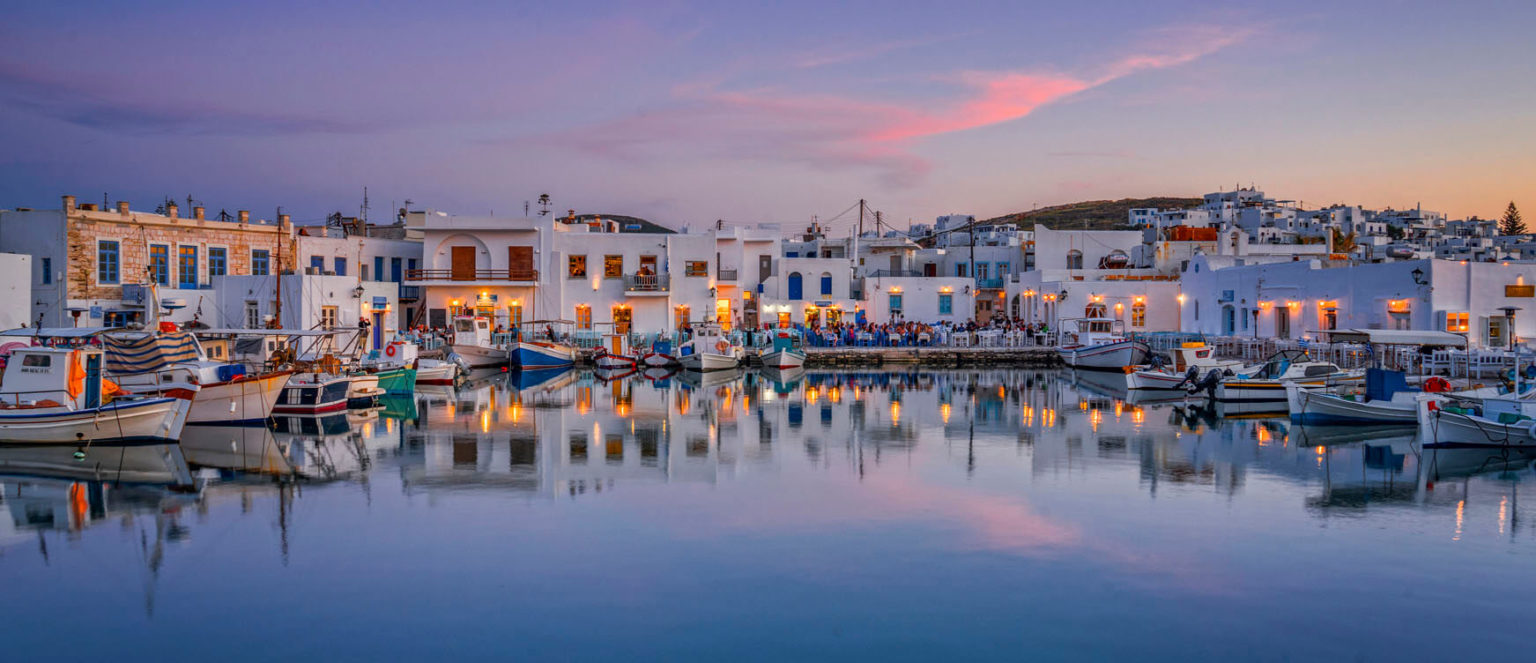

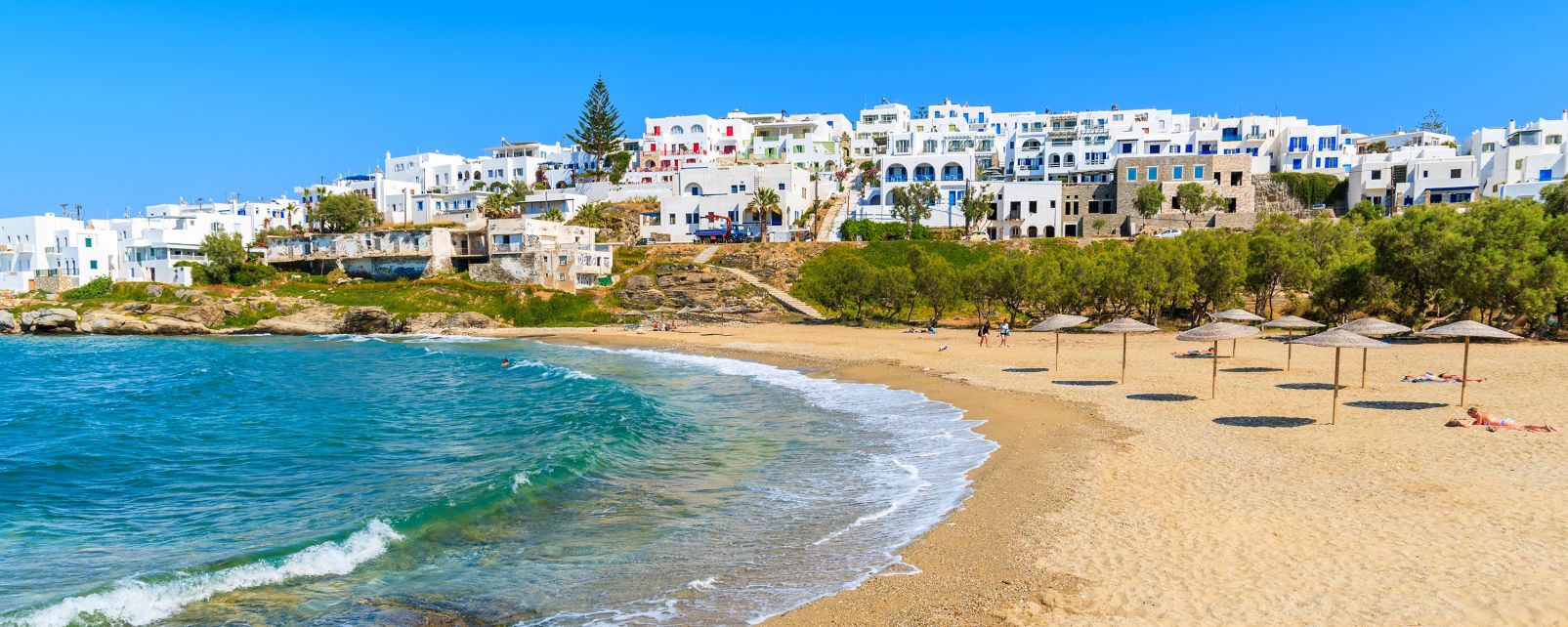
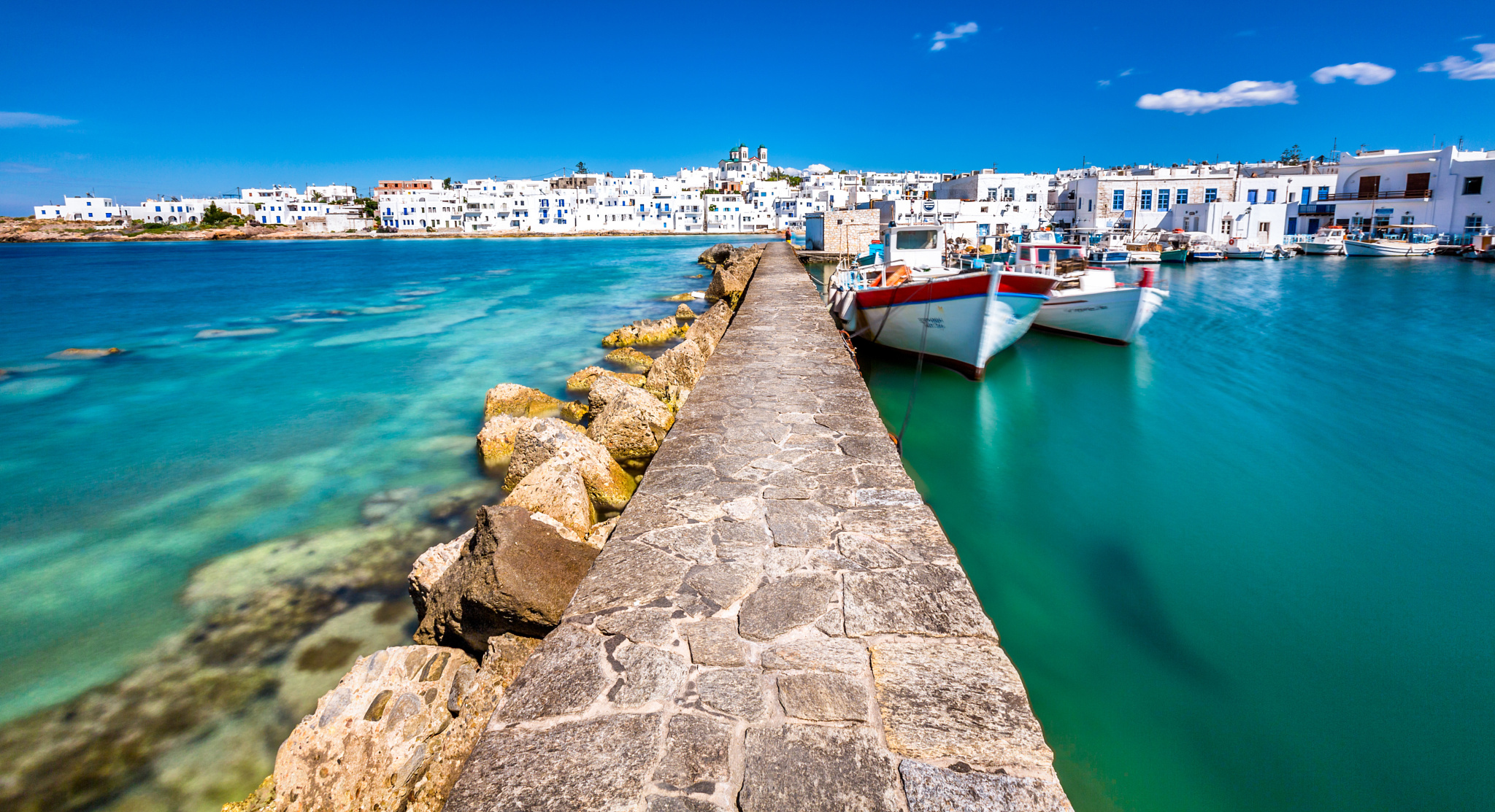
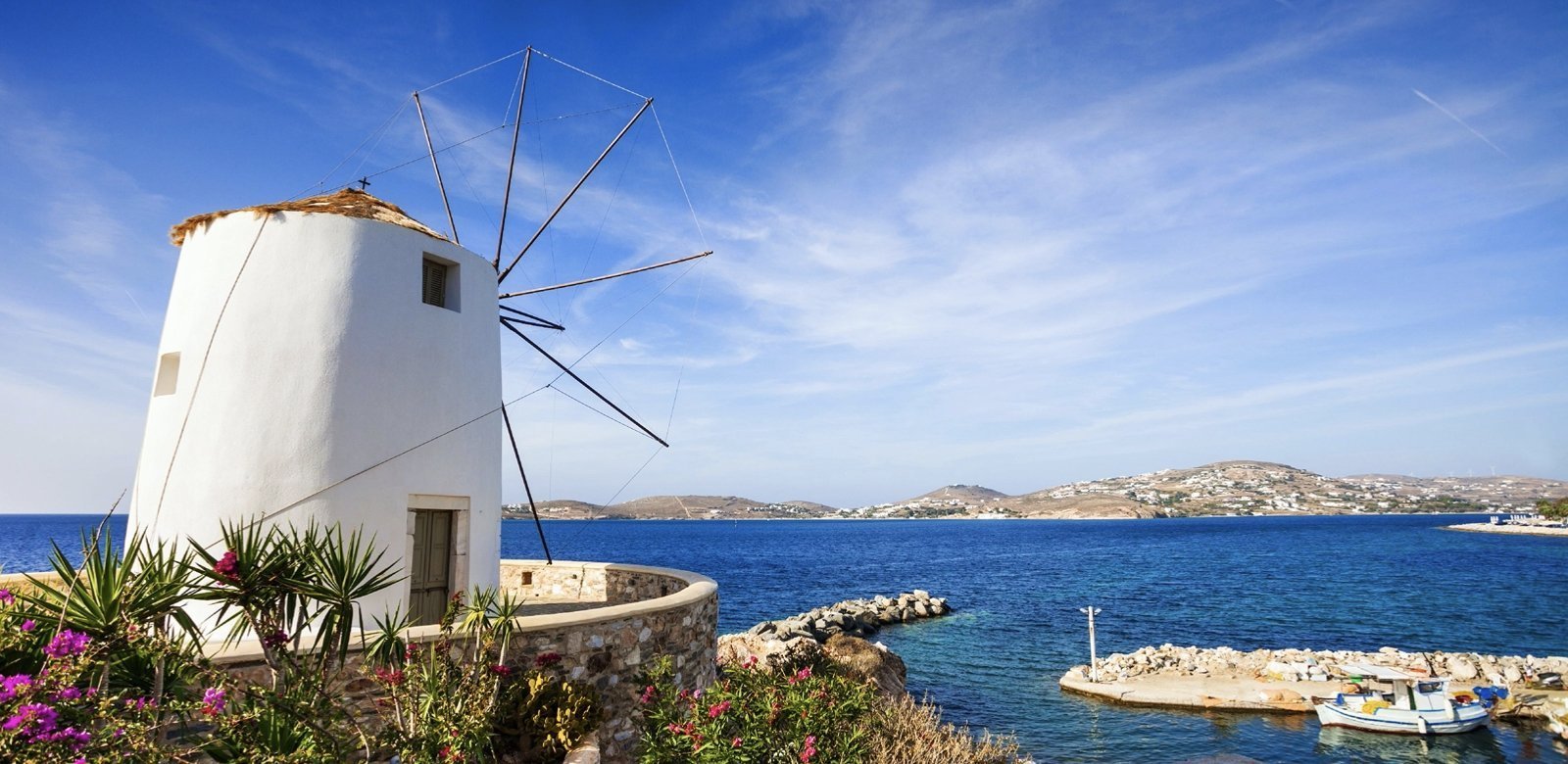


Paros is a fantastically beautiful island in the heart of the Cyclades, just a short ferry ride away from the neighboring islands of Antiparos, Naxos and Mykonos. Now also popular with the international public, numerous tourists from all over the world travel to this magical island pearl every year to spend their vacation there.
Often referred to as a party island, Paros offers a vibrant nightlife, especially in the capital Parikia and the trendy town of Naoussa. In contrast, the rest of the island is quiet, very tranquil and ideal for a relaxing Greek vacation. The months of June, July and August are the most popular times to visit Paros. The low season of April, May, September and October, on the other hand, is perfect for hiking and sightseeing.
During the summer months, Paros is connected to Piraeus and Rafina by frequent boat services, but also to Lavrio, the other Cyclades islands, the islands of the eastern Aegean, Thessaloniki and Crete, with regular and fast passenger ships. The sea journey from Piraeus takes about 4.5 hours or 2.5 to 3 hours with the faster ships.
Paros has an area of 197 km² and around 13,700 inhabitants. As the island is not too big, you can easily explore the most beautiful sights and beaches on your own in a hire car or on a quad bike.
A beautiful mountain range rises in the middle of the island, there are several marble quarries, white churches and monasteries, and some pretty villages such as Lefkes and Marpissa are hidden in the hinterland. Along the coast you will also find countless breathtaking bays and many dreamy fishing villages, where you can still experience a unique Greek flair.
Paros is also one of the most fertile islands in the Cyclades. Wine, known from ancient times, olive oil, cereals and fruit are produced there. In recent years, viticulture in particular has flourished. The branded wines of Paros, produced in the island's modern wineries, are world-famous.
In addition to agriculture, the Parians are engaged in fishing and livestock breeding. Nowadays, tourism has changed the lives of the people of Paros, but the olive trees and vines still produce their fruit, the fresh fish land on the dining tables and the local cheese is a gastronomic experience.
The climate on Paros is temperate, as on the other Cyclades islands. Winters are mild with little rainfall. Characteristic in summer are the "meltemia", the annual north winds. The subsoil of Paros is rich in marble. The famous "Lychnitis", the marble of Paros, was much sought after in ancient times for its ability to catch the light in its white color. Very famous sculptors have given shape to the marble of Paros and it has been the main source of income for the island in all historical periods.

